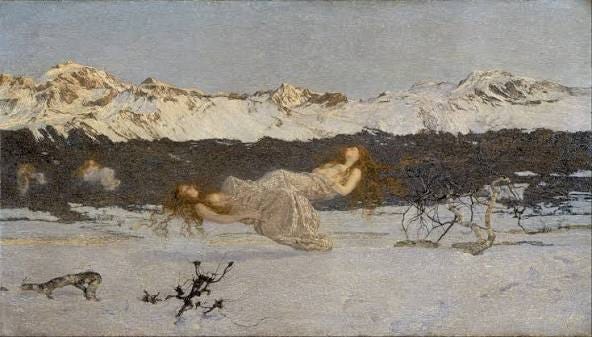
First of all, Antonia Pozzi’s poetry is not easy. It will never be the first choice for epigraph choosers or greeting cards. The poetry traverses faces where the way upwards is invisible to the reader. There are vast, silent, non-human places. At times, it seems that on her mountains, language itself is at the other end of the rope and she is just barely able to follow. Other times, it is searingly intimate.
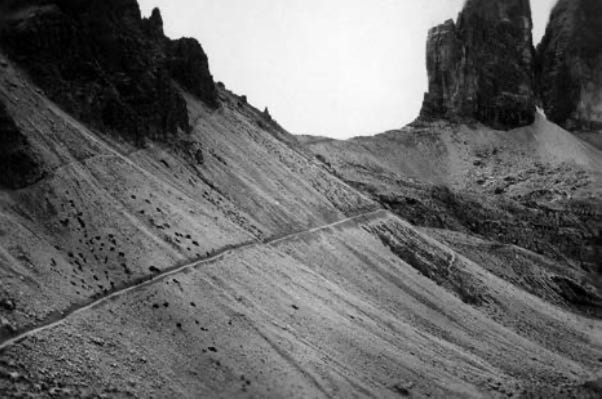
Pozzi’s world was a dramatic stage for experiments in two of her guiding passions, alpinism, and poetry. In the 1920s and 1930s, in the shadow of fascism, Eugenio Montale, Vittorio Sereni and Ada Negri wrote some of the most innovative verse of the mid-twentieth century. Pozzi wrote prolifically in this era and knew some of its most productive poets. She was also a climber in the eastern Alps during one of the most creative episodes in the history of climbing, and these experiences are the subject of much of her poetry.
Pozzi spent months every year in the Grigna mountains and was a year-round visitor to the Dolomites. Both ranges became testing grounds for redefining what was possible and acceptable in terms of risk and athleticism in mountaineering. Writers, artists, and philosophers seriously explored the meaning of climbing in newspapers as well as the specialty press. She saw how the world was breaking, how alpinism was no longer civilization’s conquest of the heights, but a warning to civilization, a survival of something non-human, transcendent and even animistic.
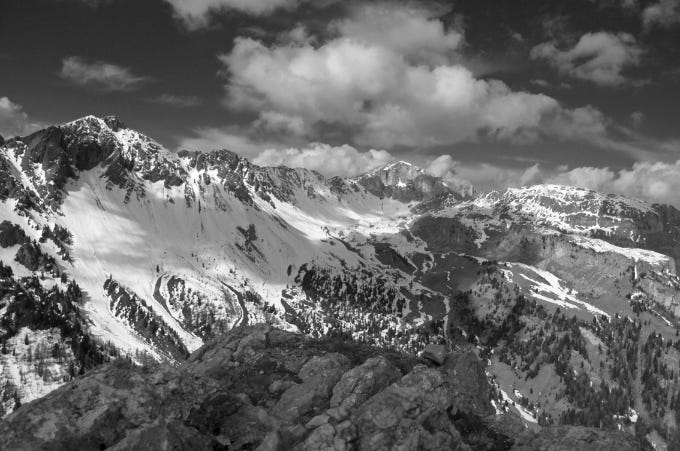
Her poetry was only published after her death, by suicide, in 1938. Her father, a fascist, put together a collection published as Parole di Antonia Pozzi, (Words of Antonia Pozzi), but redacted his daughter’s work to align it with conservative, gendered ideals of purity and obedience as if he was entitled to control her voice, even after her death.
Despite Roberto’s censorship, the literary scene was astounded by the volume and quality of the work in Parole. Pozzi holds a growing place of importance among the great Italian poets of the twentieth century. Like Sylvia Plath, her work is tinged with inner turmoil and existential despair. Ecological themes and a reverence for the non-human-ness of nature align her in some ways with American poet Robinson Jeffer, but unlike Jeffers, she sees a reciprocal relationship between the human and non-human worlds. In her verse, perception between human and mountain is a two-way process that affects both mountain and poet.
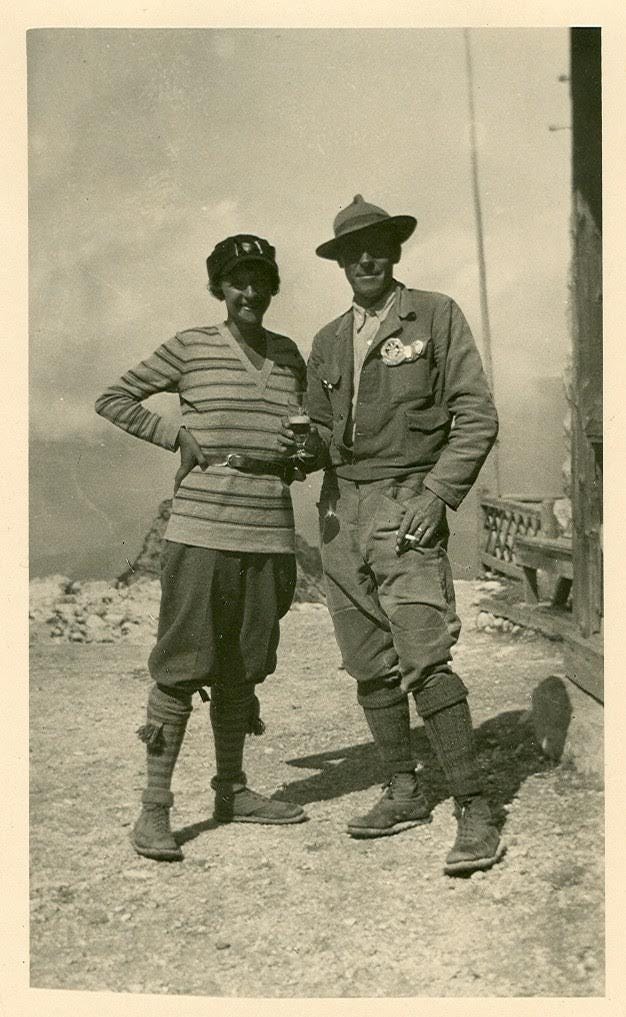
Pozzi’s mountains can have bodies, with laps to rest on and expressive foreheads. They have memories and can call to mind the innocence of childhood, they can be books read by the sunlight, climbing routes for people and clouds, sacred heroes, inexhaustible sources of goodness, inscrutable destroyers, cemeteries, tombs, gardens. They can be mothers, but never fathers.
Her mountains are made of water, rock, snow, clouds, wind, silence and wildflowers; materials at once supra-human, vast and intimate. Snow falls in delicate flakes, but also stretches across mountains in fields so vast they give birth to the stars at sunset. The place where the scree ends and walls rear up, where ropes are uncoiled, is electric with possibility. The spires and walls shoot skyward like jets of stone, but are also places where fingers and toes grasp for holds on narrow edges and the faint music of water flowing in the backs of cracks evokes silent emotions.
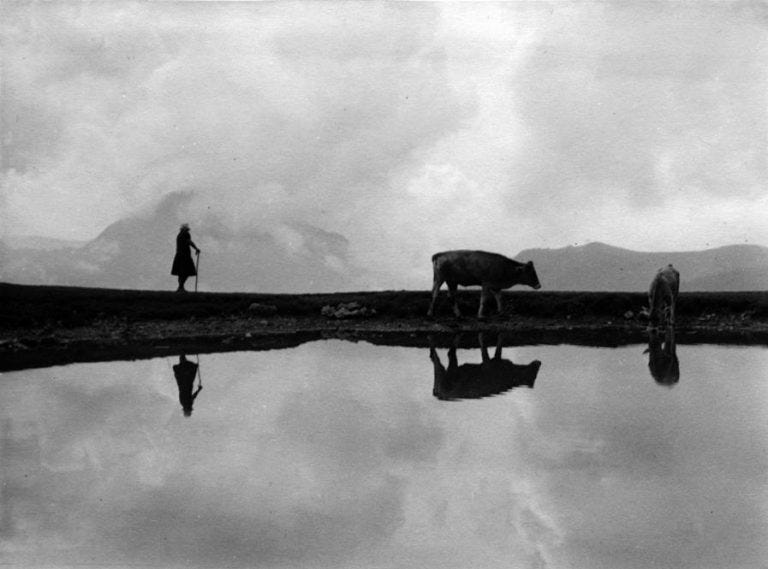
She worked in a milieu of active, threatened, necessarily politically canny poets and writers. In 1929, Italian poet Salvatore Quasimodo published Water and Earth, a collection of poems that became the seminal work in the so-called hermetic style. Spare and cryptic, without narrative or conventional syntax, Quasimodo’s introspective poems were driven by surprising, disparate symbols of his own creation. Poet Eugenio Montale had signed the “Declaration of Anti-fascist Intellectuals,” guaranteeing his marginalization as long as Mussolini was in power.
Pozzi charted a fractured, luminous and living world where the personal is political, art is survival, and even in the face of overwhelming opposition, there is power in ascending, looking to the horizon, to the mountains, and refusing to turn away. But there is no decoder key. “Don’t ask us for the phrase that can open worlds,” wrote Montale, in defense of the hermetic style in which he and Pozzi wrote. Through layered meanings, Pozzi’s poetry resisted easy interpretation, mirroring the resilience she needed to forge a voice in a world pre-disposed to silence women, regardless of their class. Her work can seem fresh in a way much modern nature poetry does not. It does not pretend to answers about human history or how to live your one life properly. But it looks, it has attention for the world that the modern world lacks, and it is fearless in a way most work that declares itself so is not.
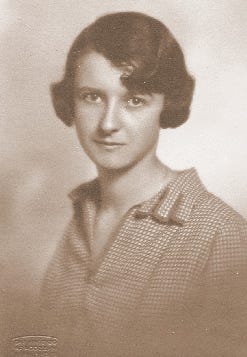
The Mountains
Like immense women they occupy
the evening:
their hands of stone clasped on their chests
they gaze at the ends of roads, silencing
the infinite hope of a return.
Mute, in their wombs they ripen
children to the absent. (Sails called to them
down there—or battles. The earth
seemed to them blue and red.) Now, at the crunch
of footsteps on the gravel,
they shudder, deep in their shoulders. The sky,
startled, flutters its white eyelids.
Mothers. And they raise their foreheads, pushing aside
the branches of stars from their vast eyes:
in case, at the last edge of waiting,
a dawn might be born
and in the barren belly rose bushes bloom.
Antonia Pozzi, Pasturo, September 9, 1937